Eighty-nine percent of clients prefer booking online over calling. That number comes from a 2024 consumer behavior study, and it tracks with what most salon owners already feel: the phone rings less, but the bookings still come in. The ones who adapted early are booked out. The ones still relying on DMs and voicemail are chasing.
The shift happened fast. A decade ago, a salon’s online presence meant a Facebook page with the address and maybe a Yelp listing. Now it means a booking link in your Instagram bio, a Google Business profile that shows real-time availability, and a website that lets someone go from “I need a cut” to “confirmed for Thursday at 2” in under a minute.
Why Online Booking Changes Client Behavior
Clients who book their first visit online are roughly twice as likely to return as walk-ins. That stat alone should reshape how you think about acquisition. A walk-in is convenient for the client but random for you. An online booking is intentional. The client chose your salon, picked a service, selected a time. They committed before they arrived.
Eighty-two percent of those online bookings happen on a phone. Not a laptop, not a tablet. A phone, usually between 8 PM and midnight, when your salon is closed and your receptionist is asleep. If your booking system requires a phone call during business hours, you are invisible during the hours your clients are most likely to act.
Your Booking Page Is Your Storefront
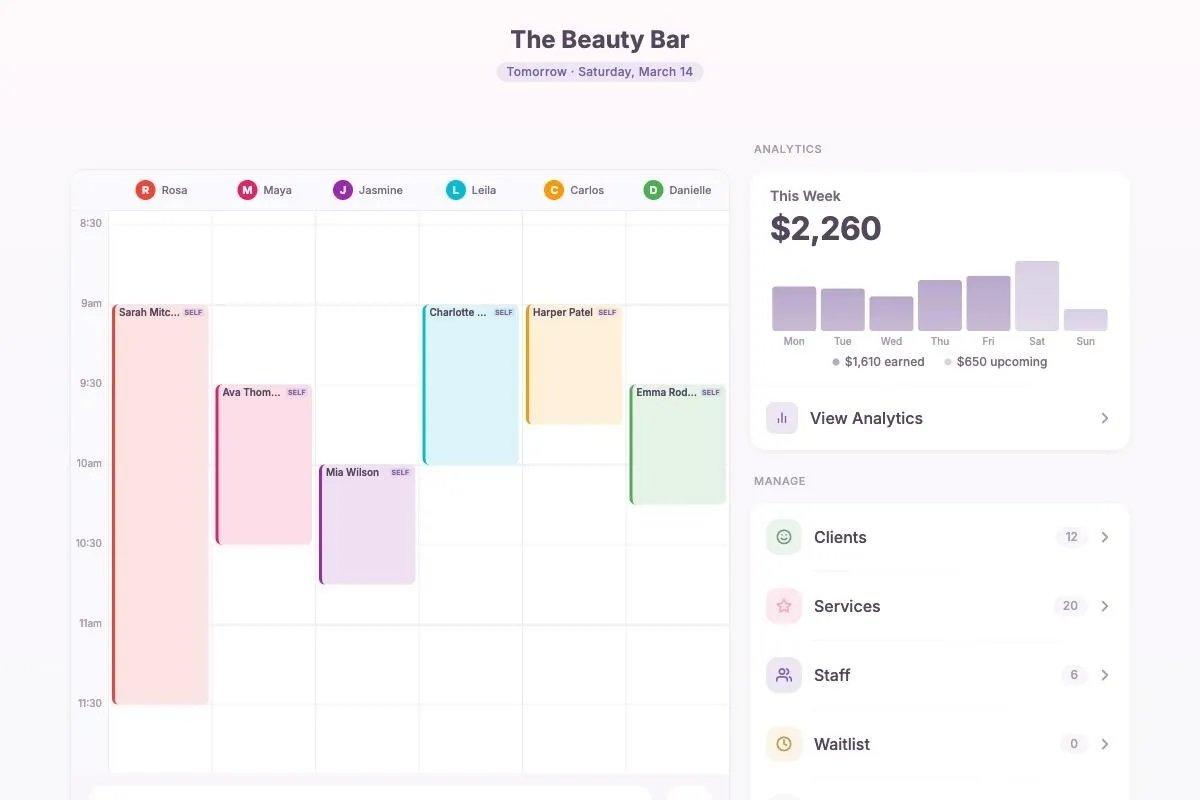
Most marketplace platforms list your salon alongside every competitor in your zip code. The client lands on a search page, compares prices, and picks whoever is cheapest or closest. You become a commodity. A dedicated booking page flips that. Platforms like Lutily give you your own branded page, yourname.lutily.com, where clients see only your services, your prices, your availability. No competitor listings. No marketplace algorithm deciding who gets shown first.
That distinction matters more than it sounds. When a client shares your booking link with a friend, that friend lands on your page. Not a marketplace where they might get distracted by a cheaper option three blocks away.
What a Working Digital Presence Actually Looks Like
You do not need a $3,000 website. You need three things: a Google Business profile with accurate hours, photos, and a booking link; an Instagram account where you post work regularly; and a booking system that lets people schedule without messaging you.
The photos matter. Before-and-afters, workspace shots, the products you use. Not stock photography. Clients scroll Instagram the way they used to flip through a stylist’s portfolio binder. Every post is a trust signal.
Automated Messages Save You Hours
Salons using automated reminders see no-show rates drop by up to 70%. A text 24 hours before the appointment, a follow-up email with aftercare tips, a rebooking prompt two weeks later. None of this requires you to type a single message. Features like automated booking confirmations and reminders handle the follow-up while you handle the chair.
The Revenue Math
Say you average $85 per appointment and you are open 6 days a week. If online booking helps you fill just two extra slots per week that would have gone unbooked, that is $170 a week. $8,840 a year. From two appointments. The average salon profit margin sits at 8%, according to Boulevard’s industry report. Two extra weekly bookings can move that number significantly.
Seventy percent of salons plan to increase digital investment this year. The question is not whether to go online. The question is whether you are going to own your booking experience or rent it from a marketplace that treats your salon like one listing among hundreds.
