
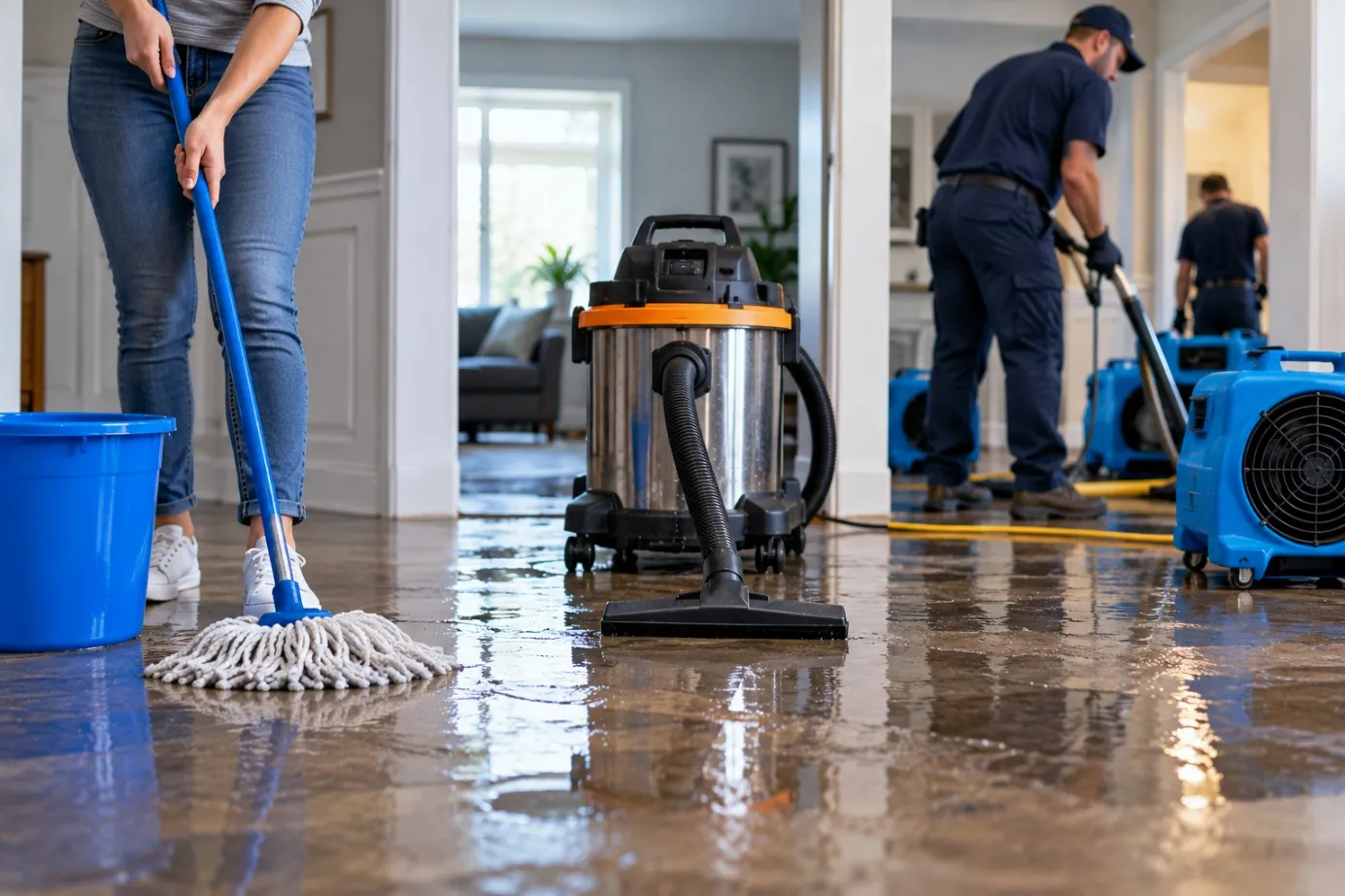
A cup of spilled water is a paper-towel job. A flooded laundry room is something else. People often start cleaning on their own, which is understandable, but there’s a line where effort stops working. Talking to professional water cleanup experts earlier than you’d like usually costs less than waiting until the smell tells you. Here’s how to spot that line.
What You Can Handle Alone
Small spills on sealed surfaces are fine for DIY. A dripping dishwasher that wets an area rug, a bathtub overflow caught within minutes on tile, or a spill from a plant pot all qualify. Blot, mop, open windows, and run a fan. If everything’s dry in a few hours, you’re probably done. Quick action matters even for small stuff.
The test is simple: clean water, small area, caught early. If the water has soaked into carpet padding or drywall, or lasted more than a day, the equation changes. Surfaces may feel dry while hiding moisture beneath. A cheap moisture meter from a hardware store can help you check before you relax.
Where Professional Equipment Wins
A shop vac removes puddles but not the water inside wood and drywall. Industrial extractors and drying gear reach what you can’t. When a crew arrives, you’re paying for tools like thermal cameras, air movers and desiccant units, not just effort. That’s why a professional water removal service tends to finish the job properly the first time.
Think of it like dental work. You can brush well at home, but you can’t see a cavity without special tools. Moisture hides the same way. Without readings, you’re guessing, and guessing about water usually ends in mold or buckled floors. Equipment turns those guesses into numbers you can trust.
The Mold Clock Starts Quickly
Mold spores are everywhere, waiting for moisture. Given damp materials and warm air, they can start growing within 24 to 48 hours. You may not see it right away, but the smell often arrives first. A musty odor after a leak is a warning, not a mystery. Warm, humid weather speeds everything up.
Once mold takes hold, the job changes from drying to remediation, with containment, special filtration and removal of affected materials. That’s a bigger project and a bigger bill. Prompt drying is by far the cheapest form of mold prevention. It’s not glamorous, but it works, and it’s usually done in days.
Counting the Real Cost
DIY looks cheaper on paper. Renting fans, buying bleach and spending a weekend feels thrifty. But hidden moisture, failed repairs and replaced flooring add up. Lost time counts too, especially if you’re juggling work and kids. A realistic budget should include a margin for mistakes you can’t see yet. Nobody budgets for the second round of repairs.
Professional work also comes with documentation. Moisture logs, photos and itemized invoices make insurance claims smoother. Without records, an adjuster may question the extent of the damage. A paper trail doesn’t just help you get paid; it proves the job was done right and that the structure is genuinely dry.
Making the Call
Ask yourself three questions. Is the water clean? Is the area small? Was it caught within a day? Any “no” means it’s time to bring in help. Trust your nose, too. If something smells off, don’t brush it aside, because smell is often the first honest signal you’ll get. Err on the side of caution when kids or elderly relatives live there.
There’s no shame in calling for backup. Plenty of homeowners start on their own and phone someone halfway through, which is fine. Just don’t wait for the third day. Most crews prefer an early call, because early jobs are simpler, cheaper and far less stressful for everyone involved. Nobody will judge a quick question.
Conclusion: Draw the Line Early
DIY has its place, and small spills deserve a mop and some common sense. But moisture inside walls and floors needs more than effort. Know the signs, check the hidden spots, and call before it spreads. A short phone call can save you weeks of repair work and a lot of frustration.
To talk through a situation, you can reach out through movefastrestoration.com and explain what happened. An honest conversation will tell you whether it’s a weekend job or a crew job, and that clarity is worth having before you spend a dime on rentals. Use that insight to decide how to spend your weekend.
